The System
Inherent ViceThe System is the novel’s name for an order of power that does not reside in one institution or one conspiracy, but moves among government agencies, police, developers, property owners, and the drug trade. It can seize a would-be reformer and return him to familiar appetites; it can also present inherited control of land, water, oil, and labor as the natural right of those who already possess them. The phrase captures both overt coercion and the quieter assumptions that make entrenched privilege seem permanent.
A network of power
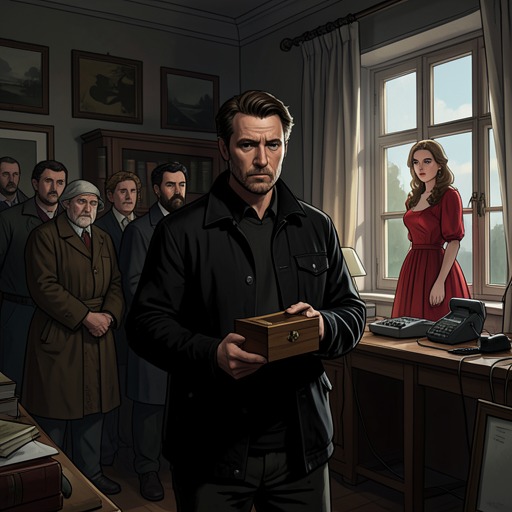
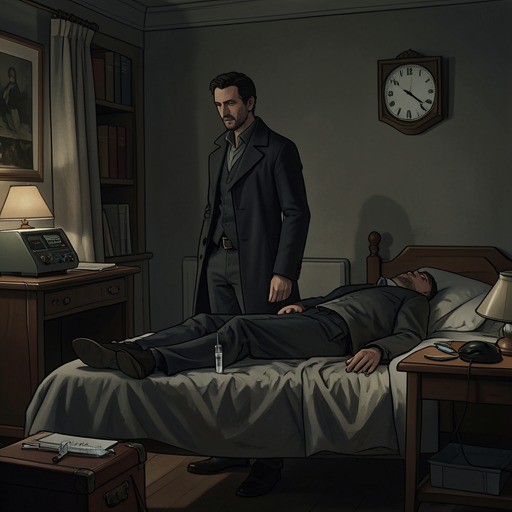
In Bigfoot Bjornsen’s account, the System operates through overlapping interests rather than a single command center. Mickey Wolfmann has encountered something he should not have seen, Bigfoot says, and armed men in John Wayne costumes panic and hustle him away. The federal government then takes an interest in the “acidhead billionaire” who intends to give away his fortune. Because the government is connected to the Golden Fang through heroin-related activity in the Far East, it has Mickey “programmed into Ojai for a little brain work.” The account ties wealth redistribution, federal power, and the drug economy together in a single chain of intervention.
This chain makes the System more than an abstract label for corruption. Its power works through access: one group can move a person into a place where his thinking may be altered, while another can treat that intervention as a practical response to a threat to established arrangements. Bigfoot describes Mickey’s confinement and programming as a consequence of the federal government discovering his plan to give his money away. The institutions involved need not share one public identity for their actions to reinforce the same outcome.
Mickey Wolfmann and the failed rescue
Bigfoot reads Mickey’s return to his “old greedy-ass ways” as evidence that the intervention has succeeded. He regrets his own “bad luck and lousy timing,” explaining that he had seen Mickey as someone who had “seen the light” and might be rescued from the System. That rescue does not happen in time. Mickey’s return to greed therefore carries two meanings: it signals the apparent defeat of his attempt to change his life, and it marks Bigfoot’s sense that a chance to rescue someone from institutional control has slipped away.
The scene leaves the outcome less settled than Bigfoot first makes it sound. He says Mickey appears to have become what the System wanted, but then allows that recurrence need not mean exact repetition: like a record, a single groove’s difference can send the universe into another song. The image offers a narrow possibility of divergence, not proof that Mickey has escaped the forces acting on him. It places the System’s power beside the prospect that a changed pattern might still emerge.
Property, belonging, and exclusion
Crocker Fenway gives the System a local, material face in his defense of Channel View Estates and the struggle between residential owners such as himself and developers such as Brother Wolfmann. He describes the fight as a long-running effort to preserve the neighborhood from urban blight and high-density development, dressing property interests in the language of environmental stewardship and respectability. Doc Sportello cuts through that framing by telling Crocker that the issue is property values.
Crocker’s reply makes the underlying claim explicit: “It’s about being in place.” Gesturing around the Visitors’ Bar and its withdrawal into shadow, he presents his group as having been there forever and declares real estate, water rights, oil, and cheap labor to have always belonged to them. The certainty of that ownership depends on contrasting the established class with the transient people who pass through the Southland, supposedly easy to buy off with a particular car, a bikini-clad blonde, a brief surf, or a chili dog. The System’s permanence is thus asserted through control of resources and through a story that reduces everyone outside the owning class to a replaceable supply.
The language of permanence sits beside Crocker’s readiness to defend it by force. When Doc imagines the displaced and excluded gathering into a mob outside the gates of Palos Verdes, Crocker shrugs that his people will do what is necessary to keep them out; they have survived worse sieges. The exchange exposes the coercion beneath his calm talk of being in place. Exclusion is not a failure of the arrangement but one of the means by which it endures.
Doc Sportello’s place within it
Doc challenges Crocker’s defense of ownership, but he also recognizes that the arrangement gives his own profession its work. He tells Crocker that if Crocker and his companions do not remain in place, average private investigators like him cannot make a living from matrimonials and car theft; they need the high-level felonies that the wealthy are so capable of producing. The joke is also an acknowledgment of dependence: Doc’s investigations expose the machinery of privilege, yet the crimes generated within that machinery provide his livelihood.
That dependence complicates any simple opposition between investigator and System. Doc can question the ruling class’s account of its property and its right to exclude, while still moving through a world whose crimes sustain him. Crocker, meanwhile, treats that reliance as a practical detail rather than a challenge to the order he defends. Their conversation brings the System down from conspiracy to everyday exchange: class conflict, real estate, investigative work, and the promise of another handoff occupy the same social landscape.
A recurring order, not a single villain
The System’s defining feature is its capacity to connect apparently separate domains. Bigfoot’s account links the Golden Fang, federal interest, and Mickey’s brain work; Crocker’s links property ownership, labor, development, and the containment of people deemed transient. Neither account requires the System to appear as one centralized organization. Its continuity lies in the way distinct powers can converge to preserve wealth and command over resources.
The conversation also resists both a totalizing certainty and an easy hope. Bigfoot sees the System apparently returning Mickey to greed, while his record-groove image leaves room for an altered recurrence. Crocker, by contrast, speaks as though his class’s possession and survival have no foreseeable end. Doc’s irony punctures that self-assurance, but his livelihood remains entangled with the felonies it produces. The System is therefore presented not only as an apparatus that acts upon individuals, but as a durable social order that can absorb resistance, describe its own interests as permanence, and make even its critics dependent on its workings.